
Diabetic Retinopathy
Prolonged high blood sugar levels damage the tiny blood vessels in the retina, causing them to swell or leak fluid. Anyone with type 1 or type 2 diabetes can develop this complication, and risk increases the longer you live with the condition.
Stages of Diabetic Retinopathy
It is generally considered there are two main stages of diabetic retinopathy, characterized by how far along the disease has progressed.
The first stage is non-proliferative diabetic retinopathy (NPDR), which is very common. It begins when damaged, leaky vessels allow fluid to seep into the retina, causing swelling (edema). This leads to blurred vision that can progress to severe impairment if untreated.
The advanced stage is proliferative diabetic retinopathy (PDR). At this point, the retina grows abnormal new blood vessels—a process called neovascularization. Because these new vessels are fragile, they frequently bleed into the eye (causing floaters or sudden vision loss). The resulting scar tissue can also pull on the retina, potentially causing detachment or macular damage.
Symptoms to Watch For
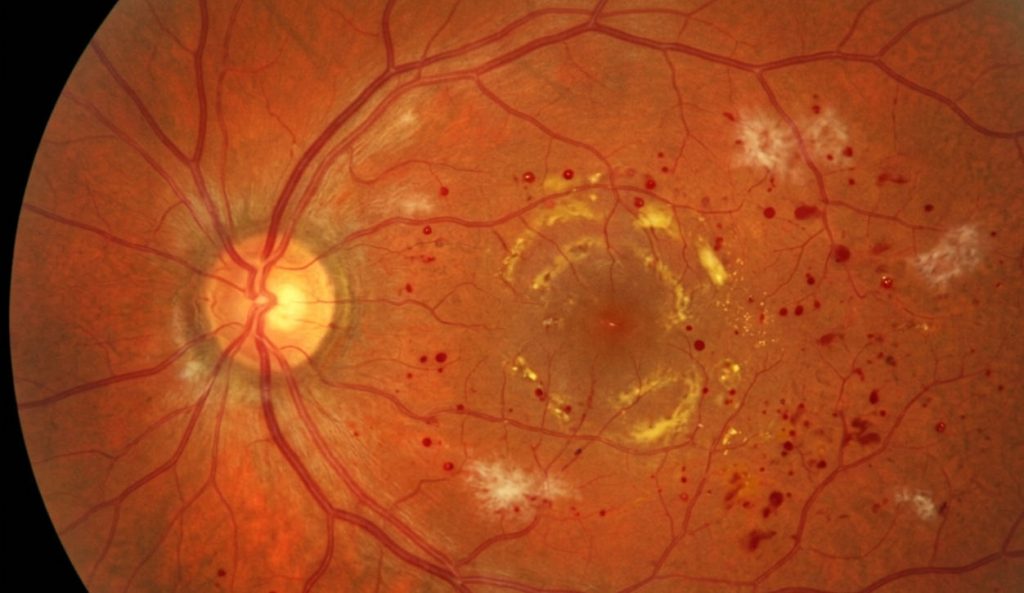
The good news is that early-stage damage often causes no symptoms at all. Many patients don’t realize they have diabetic retinopathy until it has already progressed. That’s why routine screening is essential. If you do notice changes, watch for:
Here are some of the symptoms of diabetic retinopathy:
- Dark spots in field of vision, or “floaters”
- Blurry vision
- Missing areas or blind spots in your vision
- Colours appear washed out
In the worst case, diabetic retinopathy can lead to:
- Retinal detachment
- Loss of vision
- Vitreous hemorrhage
- Glaucoma
Diagnosing Diabetic Retinopathy
To screen for diabetic retinopathy, your optometrist will first dilate your pupils with medicated drops. This standard procedure provides a clear view of the back of the eye using a specialized lens. We then use an Optical Coherence Tomography (OCT) scan to capture detailed cross-sectional images of the retina. This advanced tool maps retinal layers and helps identify fluid buildup or blood vessel changes before they affect your vision.
Treatment Options
Treatment typically begins with anti-VEGF injections. These medications target abnormal blood vessel growth, reducing retinal swelling and helping stabilize or improve vision.
If needed, focal laser photocoagulation may be used to seal leaking vessels and reduce retinal swelling.
For advanced cases, a vitrectomy may be recommended. This procedure removes bleeding and scar tissue from the vitreous gel, restoring a clear path for light to reach the retina and preventing detachment.

Preventing Diabetic Retinopathy
Although existing damage can’t be reversed, progression is highly preventable. The most effective strategy is consistent diabetes management: taking prescribed medications, exercising regularly, monitoring blood sugar levels, and quitting smoking (which significantly improves microvascular health). Because early stages are silent, annual dilated eye exams are essential for anyone with diabetes. Monitor your vision closely, report any sudden changes immediately, and never skip your scheduled appointments.
At Inner Harbour Optometry, we specialize in diabetic retinal screenings and can tailor a monitoring plan to keep your vision protected. Book your comprehensive eye exam today, or visit us at our downtown Victoria locations.
Let us help you
Schedule your eye care appointment today and experience the difference of personalized, comprehensive eye care.